
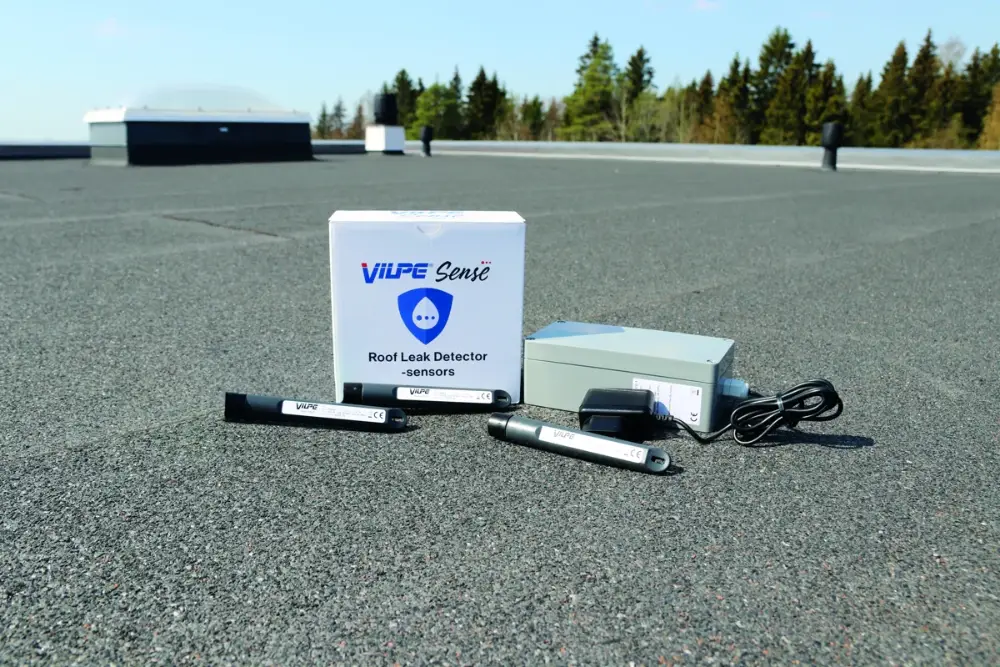
VILPE Sense
Wireless system that monitors moisture inside the roof, raises an alert and pinpoints the leak on a map before water comes through.
Moisture damage is a common problem in buildings of every type and age, and early detection is key to limiting it. Most leaks under the waterproofing cannot be seen from outside, and by the time water comes through, the insulation is already wet. VILPE Sense continuously monitors the roof, alerts you when moisture is too high and pinpoints the leak, even on very large roofs, so you can act sooner, faster and at lower cost.
Advantages
- Easy to install: for new builds and existing roofs.
- Wireless moisture measurement: continuous roof monitoring.
- Automatic alerts: instant email notification when moisture is too high.
- Targeted repairs: fix problems early and only where needed.
- Long-lasting: the sensor is easy to remove and its battery lasts up to 15 years.
How it works
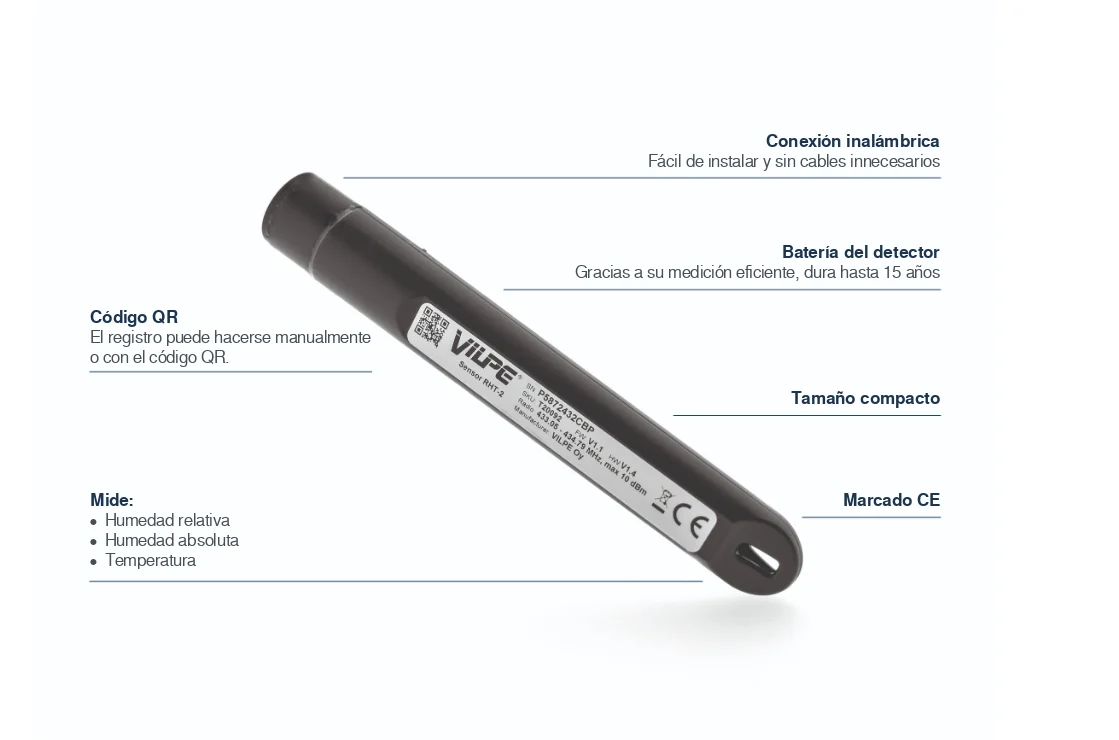
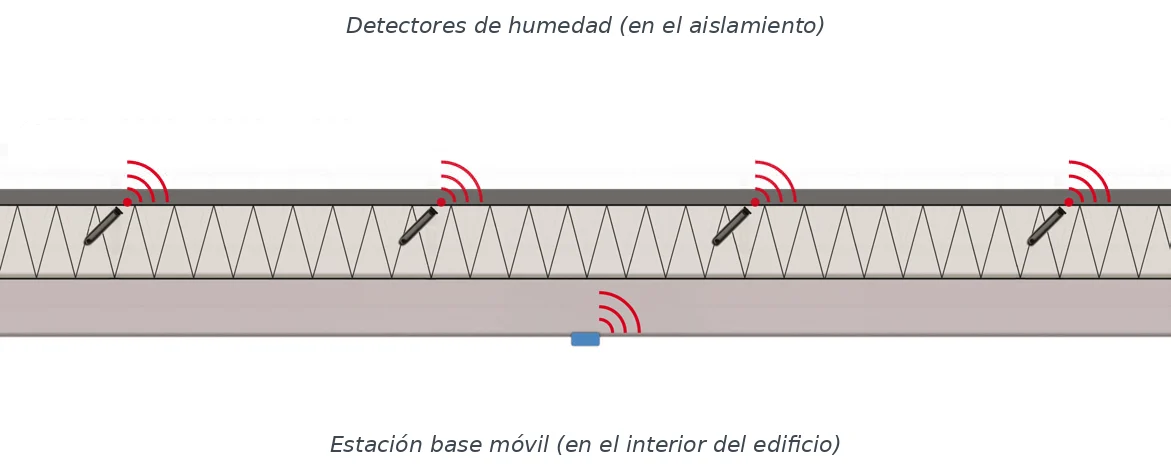
The moisture sensors are placed in the roof insulation layer and measure relative humidity and temperature; the system converts this data into absolute humidity. They send their readings wirelessly to the mobile base station, which plugs into a socket inside the building and forwards them to the cloud service via an included SIM card, with data subscription and a 10-year warranty. A single base station supports up to 200 sensors.
The project portal (sense.vilpe.com), accessible from a computer or phone, shows average data, the status of each sensor, alarms and a moisture map over the roof plan, where blue areas indicate high moisture. Moisture can rise briefly, for example when it rains, but if an area stays high for several days it points to a possible leak. The data can also be integrated into the building management system via a REST API.
Applications
Designed mainly for flat roofs, it can also monitor other moisture-sensitive structures such as walls. It is especially useful in new builds and refurbishments, can be installed on existing roofs and helps define the extent of existing moisture damage. It is highly recommended for large or hard-to-access roofs, and under PV installations or green roofs, where leaks are hard to inspect.
Plan, install and monitor
- Plan: on a scaled image of the roof (aerial photo, Google Earth screenshot or drawing), draw the digital map and place the base station and sensors 5 to 10 metres apart; the shorter the distance, the more precise the measurement. Add extra sensors in sensitive or high-risk areas.
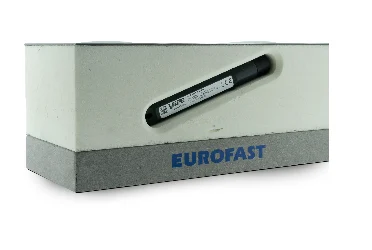
- Install: the devices are registered in the portal and placed on the roof exactly where planned. Optionally, for roof build-ups over 150 mm, Eurofast tubes can be used so that all sensors sit at the same depth and readings are comparable.
- Monitor: alarm thresholds are set in the portal. The system sends new readings twice a day and emails the owner if moisture is high.
Case study: Botniahall (Finland)
Finland's largest indoor arena, with 17,000 m² of curved roof, had suffered for years from hard-to-locate leaks, with repairs costing six-figure sums. After the roof was renewed, VILPE Sense was installed: the sensors alert the maintenance team and the digital map shows the affected areas in real time, making it 'a hundred times easier' to find a leak, according to the roofing contractor.
- Item codes
- 2
| Item code | Description |
|---|---|
| 735045 | VILPE Sense RHT-2 moisture sensor · box of 10 |
| 735044 | VILPE Sense CCU-1 mobile base station · 1 unit |
2 item codes · data from the 2025 catalogue.
- FTData sheet
VILPE_Sense_folleto_tecnico_ES.pdf (folleto técnico, español)PDF - FTData sheet
VILPE_Sense_manual_planificacion_registro_ES.pdf (planning and registration manual, Spanish)PDF - FTData sheet
Sense_technical_brochure_EN.pdf (technical brochure, English)PDF - FTData sheet
Sense_guidebook_EN.pdf (manual, English)PDF